
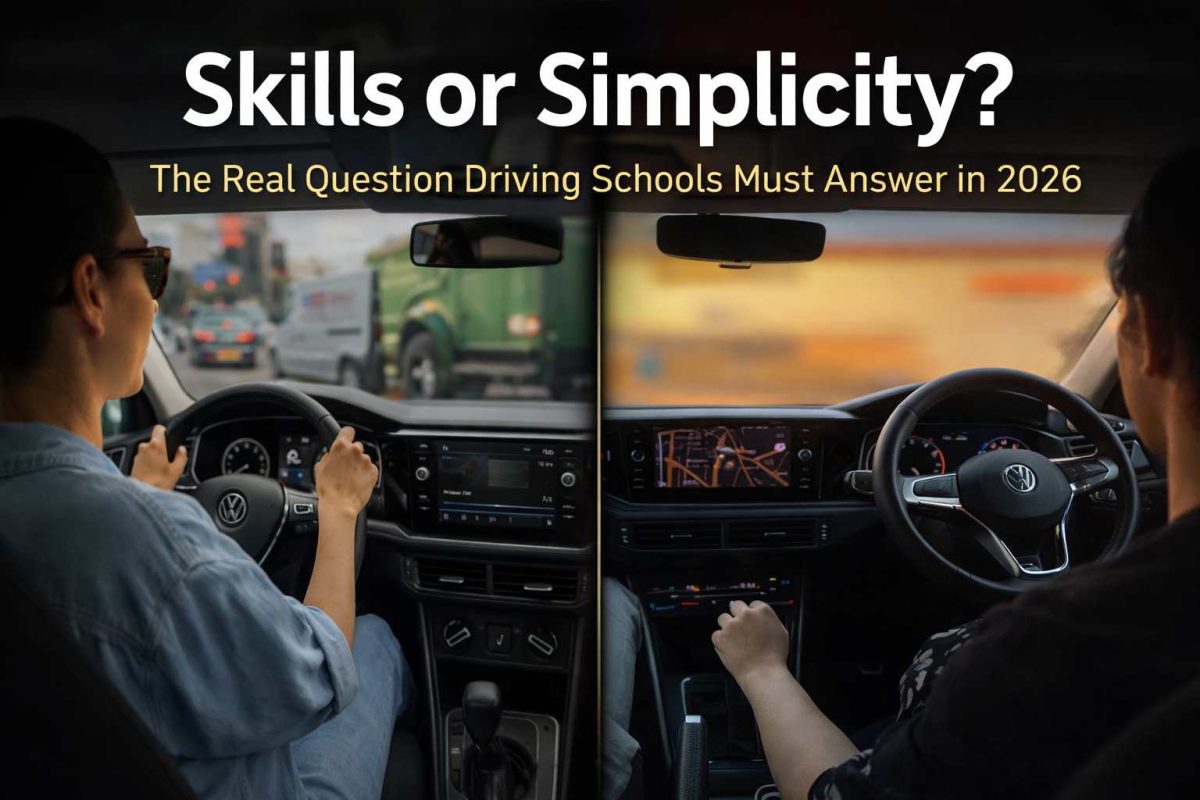
Learning to drive is not what it used to be. Cars feel different. Roads feel busier. Attention spans feel shorter. And students walk into driving schools with completely different expectations than they did even five years ago. In 2026, the real conversation is no longer just about passing a test. It is about deciding what matters more. Deep skill or everyday simplicity. Driving schools are standing at a quiet crossroads. On one side is traditional skill building. On the other is modern convenience. Both matter. But knowing how to balance them is what will define strong programs in the coming year.
There is something powerful about truly understanding a car. Feel how it responds. Learning timing. Learning patience. Learning coordination. When a student enrolls in a manual driving course, they are not just learning to move a vehicle. They are learning awareness. Managing gears teaches rhythm. Using a clutch teaches control. Mistakes happen. The engine stalls. Nerves show up. But that process builds resilience. It forces focus. It sharpens reaction time. Many experienced drivers will say those early lessons made them more alert on the road later in life. Driving schools that continue to teach these deeper mechanics are giving students more than a license. They are giving them confidence that stays with them in different vehicles and different road conditions.
At the same time, the world has changed. Cities are crowded. Traffic is constant. Technology is everywhere. For many learners, reducing complexity lowers anxiety. That matters. Choosing an automatic driving course often allows students to focus fully on awareness, mirrors, traffic flow, and defensive habits without juggling gear changes. For someone already nervous, removing one layer of difficulty can make all the difference. Simplicity is not weakness. It is efficiency. It allows certain learners to progress faster and build calm confidence. And calm drivers make safer choices. Driving schools that understand this are not lowering standards. They are adapting to modern realities.
The bigger question is not manual versus automatic. The real question is what kind of driver you want to shape. Students today need emotional preparation just as much as technical training. They need help managing distractions. They need guidance on handling road rage. They need support in building steady decision-making under pressure. Skill matters. Simplicity matters. But mindset may matter most. Driving schools that focus only on mechanics risk missing the human side of driving. And schools that focus only on convenience risk skipping deeper development. The sweet spot is somewhere in the middle.
In 2026, strong driving programs will not argue about which transmission wins. They will ask how to create drivers who feel capable and responsible, no matter what they sit behind. That might mean offering both paths. It might mean educating students clearly about what each route teaches. It might mean encouraging learners to think long-term instead of just short-term ease. Driving is freedom. It is independence. It is also a responsibility. Schools that remember all three will stand out. Because at the end of the day, it is not about gears or no gears. It is about preparing you for real roads, real pressure, and real life.
Leave a Reply